
Fauna and Flora
A meeting of grasslands, forests and rivers.
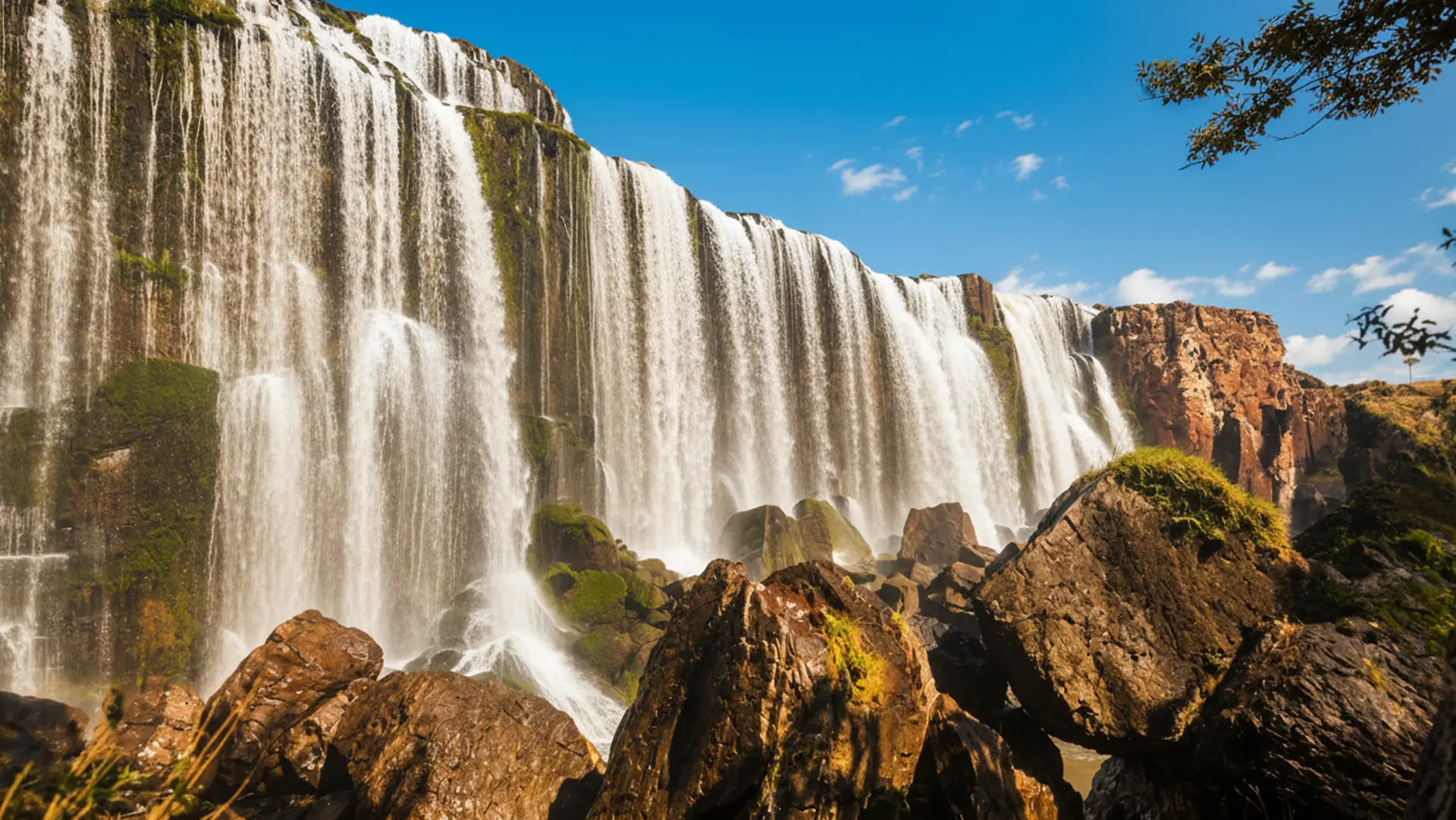
Tainhas State Park is one of the main biodiversity refuges of the Campos de Cima da Serra. Its combination of highland grasslands, araucaria forests, wetlands, peatlands, rivers and riparian forests creates conditions for the occurrence of more than 320 plant species and more than 250 species of vertebrate animals.
This diversity of environments turns the park into an important refuge for the fauna and flora of the Campos de Cima da Serra and the Atlantic Forest.
Flora: the richness of the Campos de Cima da Serra
Much of the park's landscape consists of native grasslands, ecosystems that shelter hundreds of species of grasses, herbs and small shrubs adapted to the climate, winds and temperature variations characteristic of the region.
Araucaria (Araucaria angustifolia)
A symbol of southern Brazil, the araucaria is one of the most important species in the region. Its distinctive crown dominates the landscape, and its seeds, the pinhões (pine nuts), serve as food for several species of birds and mammals. The araucaria is currently considered an endangered species due to the reduction of its natural habitat.
Capim-caninha (Andropogon lateralis)
One of the most characteristic species of the highland grasslands, it plays a fundamental role in shaping the grassland landscape and in maintaining local biodiversity.
Goiabeira-serrana / feijoa (Acca sellowiana)
A species native to the Campos de Cima da Serra, it produces fruit appreciated by wildlife and local communities.
Butiá-da-serra (Butia eriospatha)
A palm typical of the highland environments of southern Brazil, an important food source for several species.
Cambará (Gochnatia polymorpha)
A traditional tree of the region, associated with the identity of the Campos de Cima da Serra and even present in the origin of the name of the municipality of Cambará do Sul.
Brinco-de-princesa (Fuchsia regia)
A species native to the Atlantic Forest that produces flowers attractive to birds and pollinating insects.
Bromeliads
These plants store water between their leaves, creating small natural reservoirs that shelter insects, amphibians and other organisms.
Orchids and Epiphytes
The park is home to several species that live on trunks and branches without taking nutrients from the host trees. These plants contribute to biodiversity and help create microhabitats important for wildlife.
Rare and endemic species
Among the fauna highlights is a freshwater sponge known as feltro-d'água (Oncosclera jewelli), an endemic species whose origin dates back to ancient geological periods when the continents were connected.
Fauna: life in motion
The diversity of environments in the park favors the occurrence of numerous animal species, many of them rare or endangered.
Puma (Puma concolor)
The largest feline in the region, it occupies the top of the food chain and plays a fundamental role in ecosystem balance.
Pampas deer (Ozotoceros bezoarticus)
A symbol of the southern grasslands, it finds in the park's open environments suitable conditions for feeding and reproduction.
Neotropical otter (Lontra longicaudis)
It inhabits preserved rivers and watercourses and is considered an important indicator of environmental quality.
Pampas fox (Lycalopex gymnocercus)
A species typical of the grasslands of southern Brazil, it plays an important role in the region's ecological balance.
Capybara (Hydrochoerus hydrochaeris)
Frequently observed on riverbanks and wetlands, it lives in groups and uses water as natural protection.
Vinaceous-breasted parrot (Amazona vinacea)
An endangered species strongly associated with araucaria forests.
Crowned eagle (Urubitinga coronata)
One of the rarest birds of prey in Brazil, it finds important feeding grounds in the region's grasslands.
Black-and-white monjita (Heteroxolmis dominicana)
A bird typical of the southern grasslands, considered one of the species of greatest conservation interest in the region.
Saffron-cowled blackbird (Xanthopsar flavus)
A species associated with grassland and wetland environments, reinforcing the ecological connection between the Campos de Cima da Serra and the Pampa biome.
Amphibians
The park's wet environments favor a rich diversity of amphibians, including toads, frogs and tree frogs. There are currently 22 recorded amphibian species in the park, equivalent to approximately 20% of all species known for Rio Grande do Sul. These animals play an essential role in ecological balance, both controlling insects and serving as a food source for other wildlife groups. Because they are highly sensitive to environmental changes, they are considered important indicators of ecosystem quality.
Conservation
Created to protect a representative sample of the Campos de Cima da Serra, Tainhas State Park conserves species, landscapes and ecological processes that are fundamental to maintaining regional biodiversity.
The protection of rivers, grasslands, wetlands and forests ensures not only the survival of local fauna and flora, but also the maintenance of environmental services that benefit society as a whole, such as water production, soil protection and climate regulation.
The park's conservation also contributes to maintaining the water quality of the Tainhas River basin, one of the most important water systems of the Campos de Cima da Serra.