
Passo do S
A crossing through time. One of the main symbols of Parque Estadual do Tainhas.
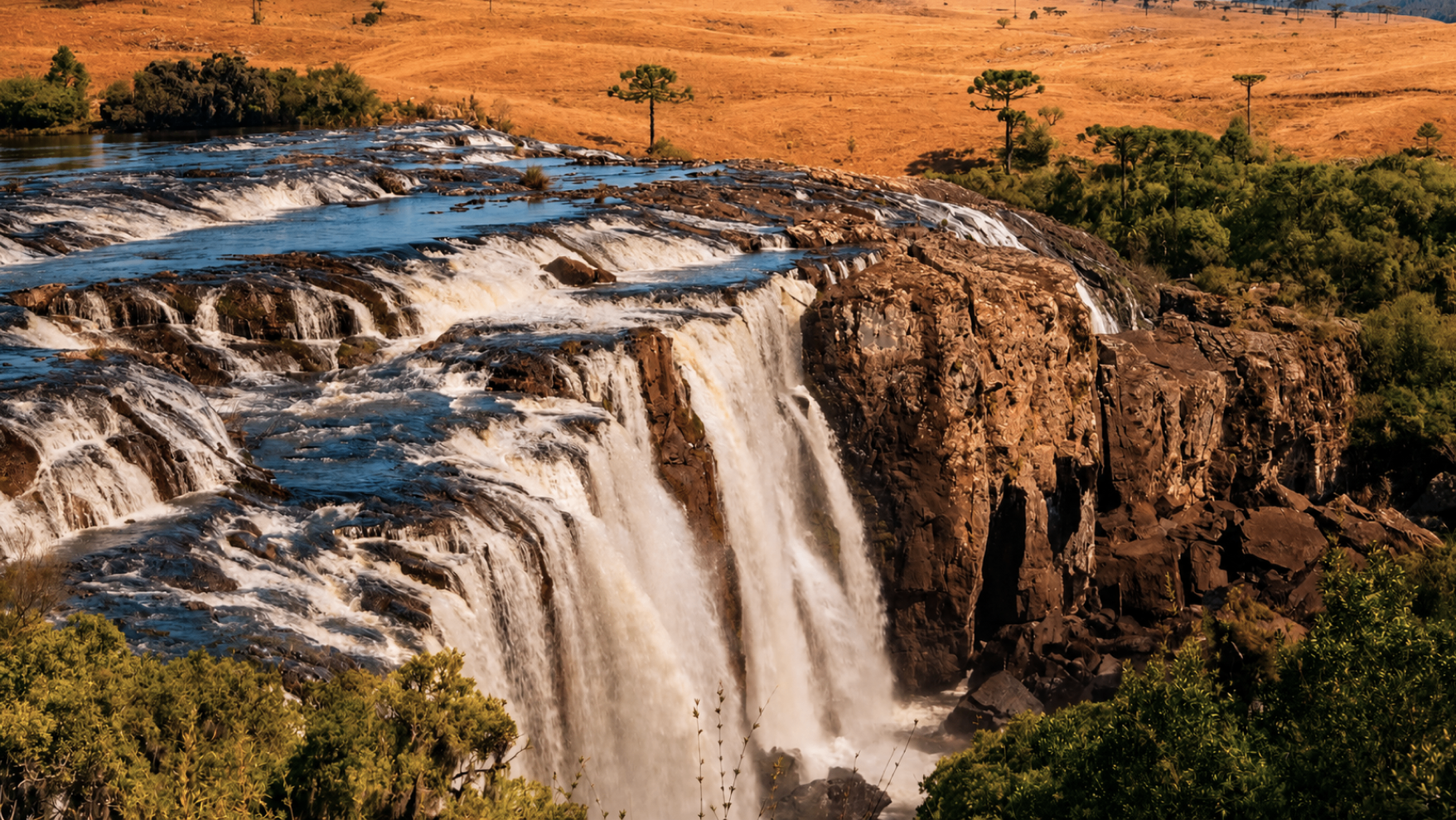
Passo do S is formed by an extensive basalt rock pavement originated by the volcanic flows that gave rise to the Planalto Meridional about 130 million years ago.
Over thousands of years, the continuous action of water has shaped the surface of the rock, creating the winding pattern that resembles the letter “S” and gives the site its name. The result is a unique landscape, where geology, hydrology and biodiversity meet.
Besides its historical importance, Passo do S is one of the most representative environments of the geological heritage of Campos de Cima da Serra. The meeting of ancient basaltic flows and the continuous action of water created small rapids, rocky pavements and natural formations that help tell the geological history of the region.
Passo do S also holds great historical importance. During the 18th and 19th centuries, cattle drovers (tropeiros) used this stretch to cross the rio Tainhas on their journeys between southern and southeastern Brazil. Mule trains, goods and stories that contributed to the occupation of Campos de Cima da Serra passed through here.
Today, the site offers a unique opportunity to understand how nature and human presence helped shape the region's identity.
What to observe
- Geological formations of volcanic origin
- The course of the rio Tainhas
- Native grasslands
- Riparian forest
- Historical traces linked to the tropeiro tradition
- Fauna associated with aquatic environments